 Guankeyun
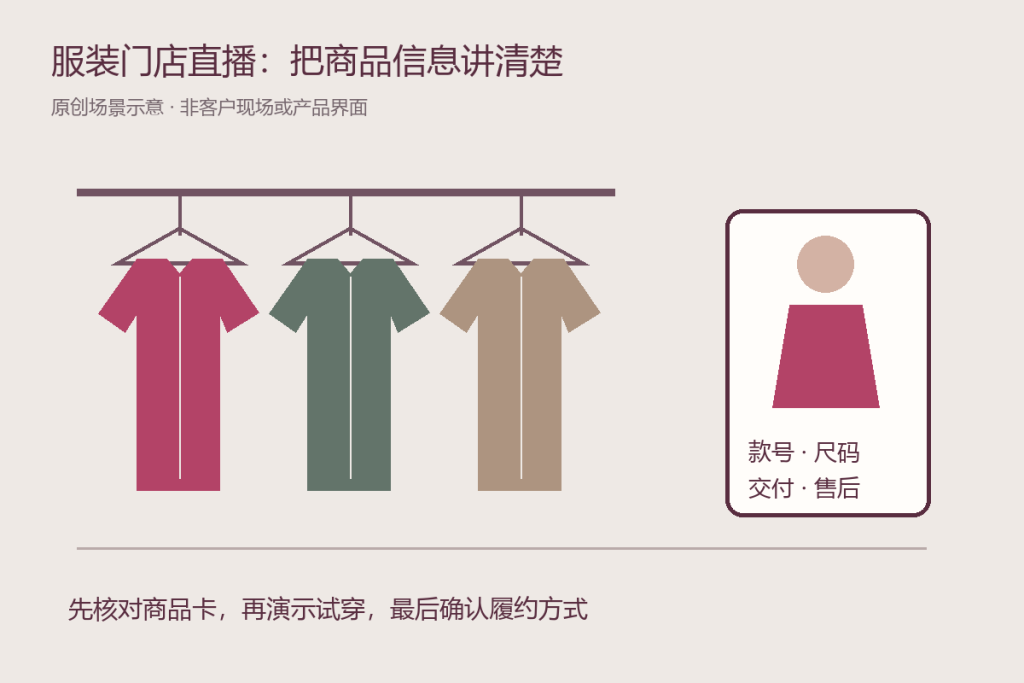
Fashion-store livestream viewers often ask about more than discounts: which size to wear, whether the item is in stock, and how to receive it after ordering. When selecting livestream software, separate these questions into product information, fit explanations and fulfillment checks. This reveals more practical differences than comparing video clarity alone. The following checklist suits a single store or small chain preparing a trial broadcast.
1. Decide which products to sell and who will fulfill the orders
Your first broadcast does not need to feature the entire store. Choose items with complete information, confirmed stock and clear after-sales responsibilities. Maintain one reference sheet for each style covering colors, sizes, fabric information, price, available quantity, shipping or pickup method, and the staff member responsible for checking it. Product cards, host notes and customer-service replies should use the same version, with updates shared promptly.
If store stock, warehouse stock and online availability are managed by different people, agree which source is authoritative. A stock display does not necessarily mean inventory is synchronized across every store. Confirm cross-store transfers, reservations and synchronization frequency separately.
2. Explain sizing consistently, beyond height and weight
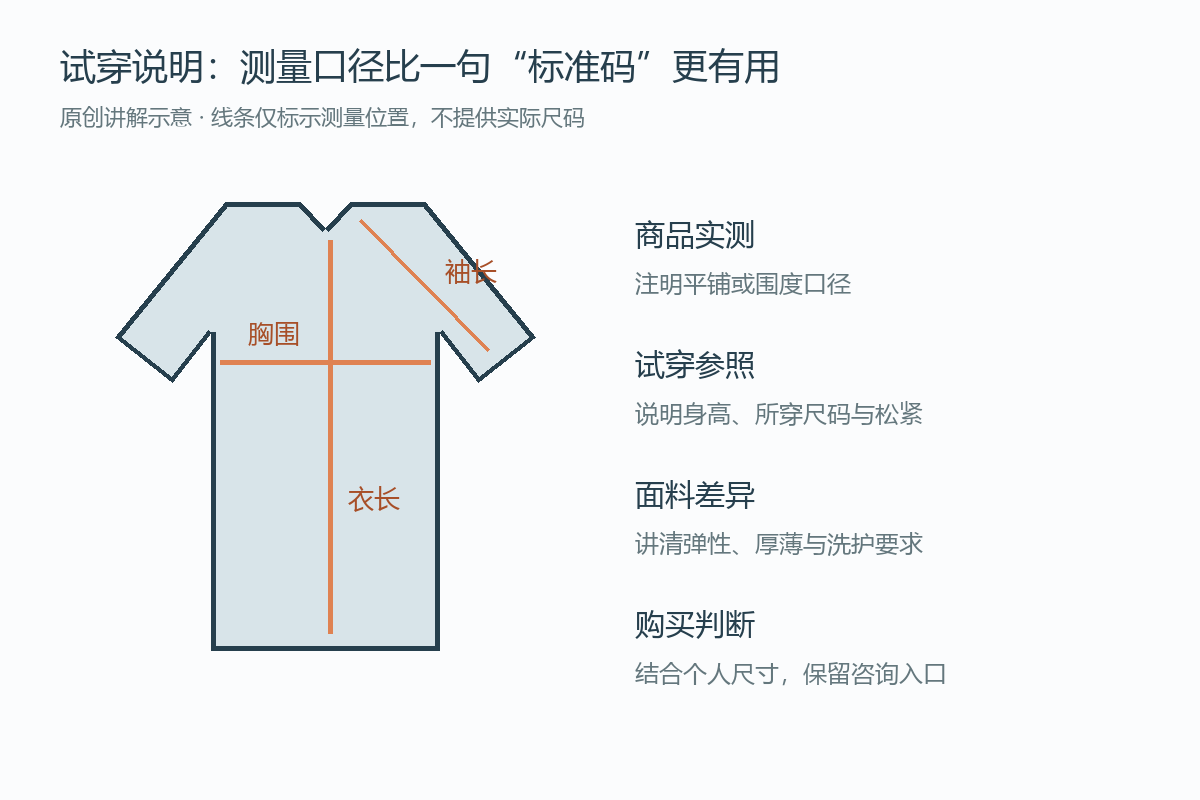
Two garments labeled M may have different measurements and fits. Prepare measured product information, explaining how chest, length and sleeve measurements are taken. For stretch fabrics, state the condition under which measurements were made. During try-ons, identify the worn size, tightness and freedom of movement. Make clear that a demonstration is a reference, not a guarantee of fit for every customer.
Show the front, side, back and details in sequence, then answer specific questions. For questions about transparency or restricted shoulder movement, rely on the actual garment and accurate descriptions. Do not improvise promises about unverified composition, care instructions or performance.
3. Test four exceptions in the product and order workflow
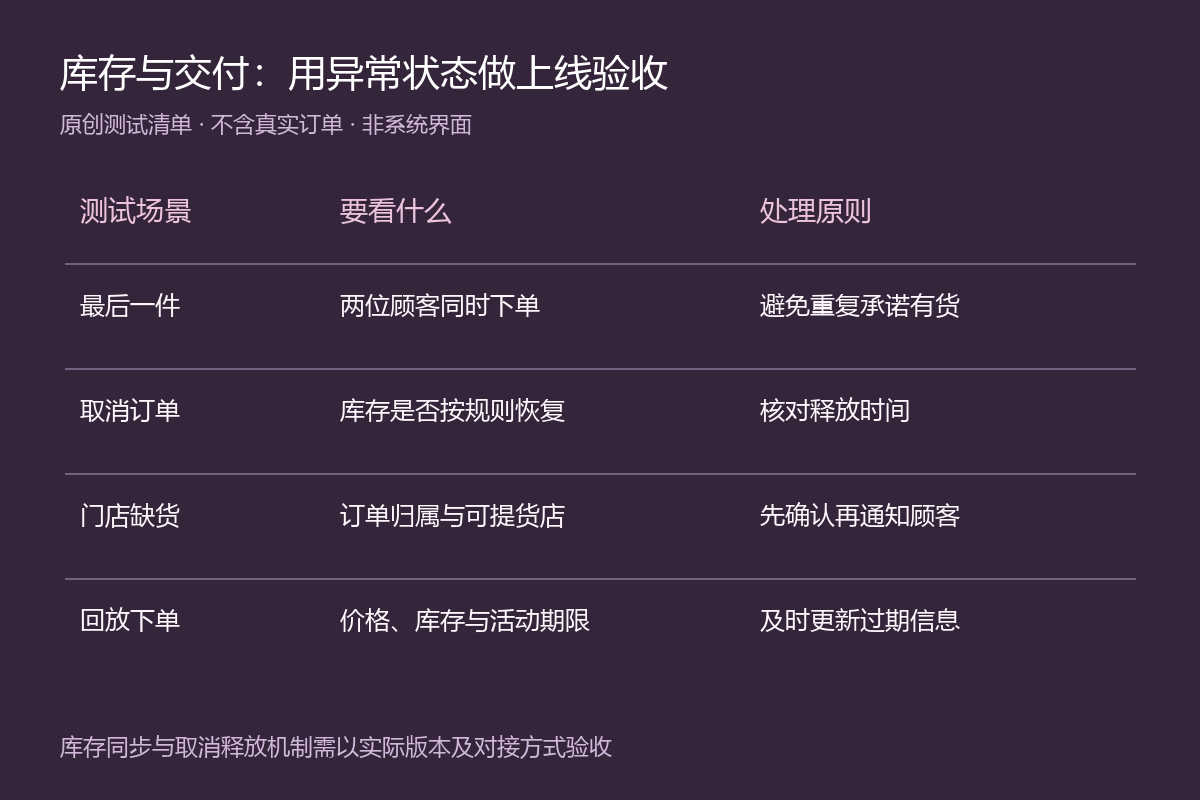
Review Guankeyun’s livestream store overview, then request an end-to-end demonstration with test products. The website describes livestream shopping, stock-status displays and order operations. Specific SKU management, stock reservations, release after cancellation and external inventory integrations still need individual verification in the actual version.
First, test what happens when two customers try to buy the final item, checking for overselling and where notifications appear. Second, cancel or close an unfinished order and check whether and when stock returns. Third, determine who confirms a transfer or refund when a store has no stock and how the customer is informed. Fourth, open the product page from a replay and verify prices and stock after the promotion ends. Record the steps, actual results and unresolved issues.
4. Describe store pickup and delivery separately
For pickup orders, tell customers which store to visit, opening hours, the required proof and how to contact the store. An order’s attribution to a store does not establish that the correct size is ready there. Chains should also agree who confirms requests to collect from another location, so neither store assumes the other is responsible.
The community store module describes store management and redemption. Fashion businesses should additionally test partial pickup, correction of mistaken redemption and staff permissions. Do not promise unverified operations to customers. For delivery, confirm recipient information, shipping arrangements and the after-sales contact point. Display size-exchange conditions clearly before checkout.
5. Review errors before expanding your broadcasts
Record repeated questions, incorrect size selections, stockout cancellations, pickup at the wrong store and after-sales reasons separately. Repeated sizing questions call for better measurements and demonstrations; stockouts call for clearer inventory definitions; difficulty finding orders calls for better links and service instructions. Viewer counts cannot replace these fulfillment checks.
This checklist suits fashion retailers with existing stores and defined product supplies. For complex warehousing, cross-region transfers or multiple inventory systems, confirm the integration approach before scaling broadcasts. Launch readiness means consistent information, clear exception handling and successful customer fulfillment, rather than attractive numbers from a trial session.